Donation & recycling · THE CLEAROUT JOURNAL
Furniture donation in Denver: check these things before booking
A practical way to decide whether furniture can be donated, arrange pickup access and make a backup plan before your move-out deadline.
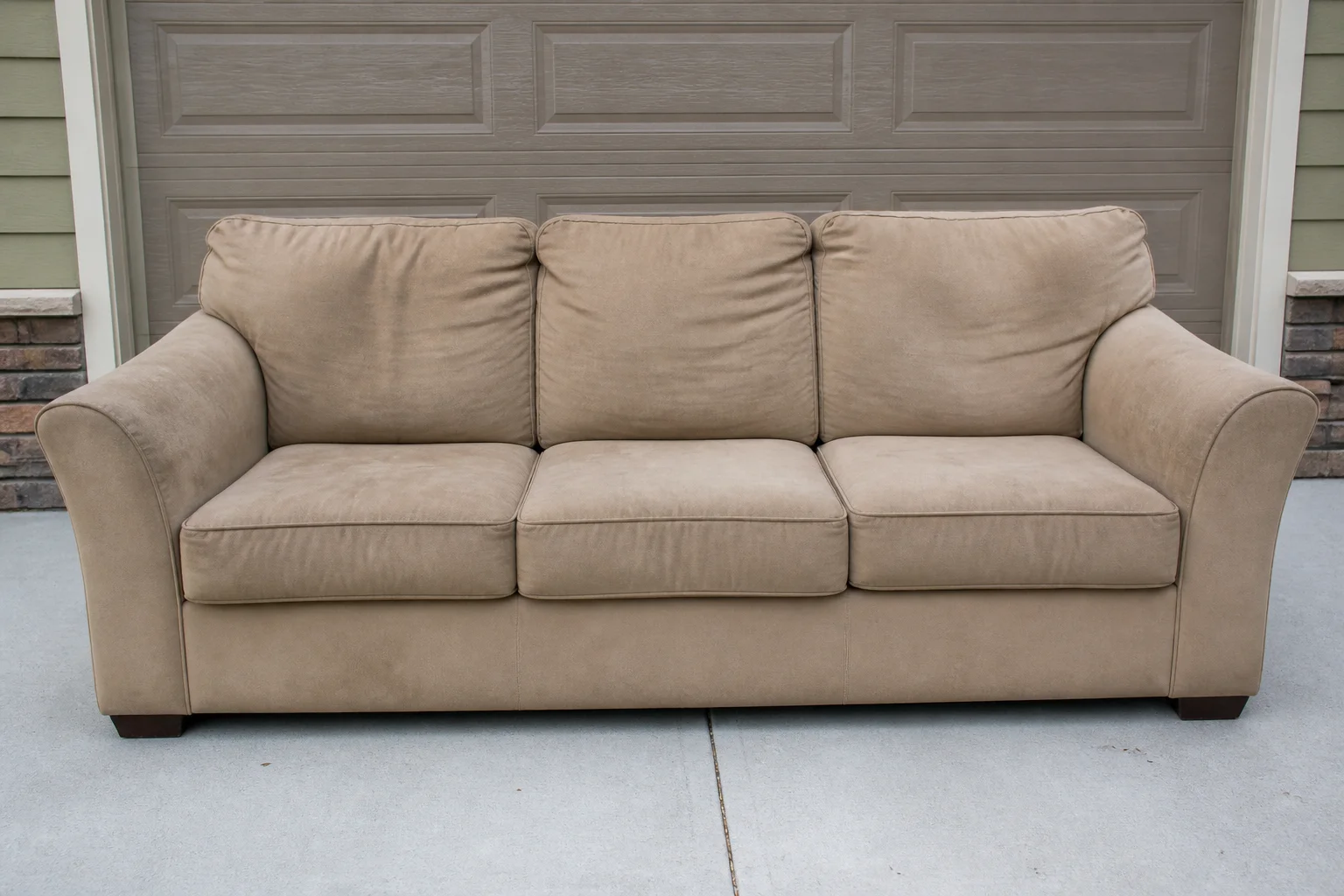
Giving a useful piece of furniture another home can be a good first option. The plan works best when you confirm the destination before your moving day depends on it.
Photograph the condition, not just the style
Start with one photo of the whole piece, then show the surfaces, corners, legs and any damage. For a sofa, include the cushions and mention stains, odors or a sleeper mechanism. For a table or dresser, mention missing hardware, loose parts or anything that no longer works.
Describe dimensions and whether you can take the item apart. An accurate description gives the receiving organization a better basis for a decision and avoids a wasted pickup or drive. Do not hide a defect because you hope someone can fix it.
- Item type, approximate dimensions and number of pieces.
- Clear condition photos, including wear and damage.
- Whether all drawers, doors and moving parts work.
- Current location: inside, upstairs, basement, garage or outside.
Check a real local organization’s acceptance rules
Habitat for Humanity of Metro Denver’s ReStores consider gently used furniture, subject to staff approval. Their donation page distinguishes pickup and drop-off acceptance and says regular pickups do not enter the home: items need to be outside or in a garage. A separate paid priority service has different access options.
Check the organization’s current item list, service area and scheduling instructions directly. Ask which pickup option you are booking before moving furniture. We are not affiliated with Habitat or its pickup providers.
Give a donation attempt its own deadline
If you must hand over keys on Friday, “someone might collect it this week” is not a workable plan. Ask for a confirmed date and decide when you will switch to a backup option if the donation has not been accepted or scheduled.
Avoid scheduling two providers for the same item without telling them. Once an item is accepted and a pickup is confirmed, update any other requests. If you arrange an individual giveaway instead, agree on collection details and keep the rest of your property clearly out of the pickup scope.
| Situation | Next step |
|---|---|
| Accepted with a confirmed date | Prepare the approved items and follow the provider’s access instructions. |
| Still waiting for approval | Keep the furniture in place and set a decision deadline. |
| Declined because of condition | Check an appropriate disposal or recycling route. |
| Inside carry needed | Ask explicitly whether the service includes that carry and any charge. |
Plan separately for the pieces that are declined
One accepted table does not mean the entire room is accepted. Keep a separate list for worn upholstery, damaged furniture and mattresses, and confirm the destination for each. Do not leave declined items at a donation site after hours.
If you use private hauling, ask whether your requested destination is feasible before agreeing to the quote. Peak Elevation reviews the load and disposal needs but does not guarantee donation acceptance or a particular recycling outcome. Paid removal and charitable donation are different arrangements.
Make the collection easy to identify
Label only the items being collected. Empty drawers and shelves, remove personal papers, and keep keys, chargers and small belongings out of the pile. If an item has removable parts, keep them together and show them in the photos.
Do not drag a heavy piece outside to satisfy a service you have not confirmed. First decide who will carry it, how the path will be cleared and whether weather could damage the item while it waits. A little planning protects both the furniture and your move-out schedule.