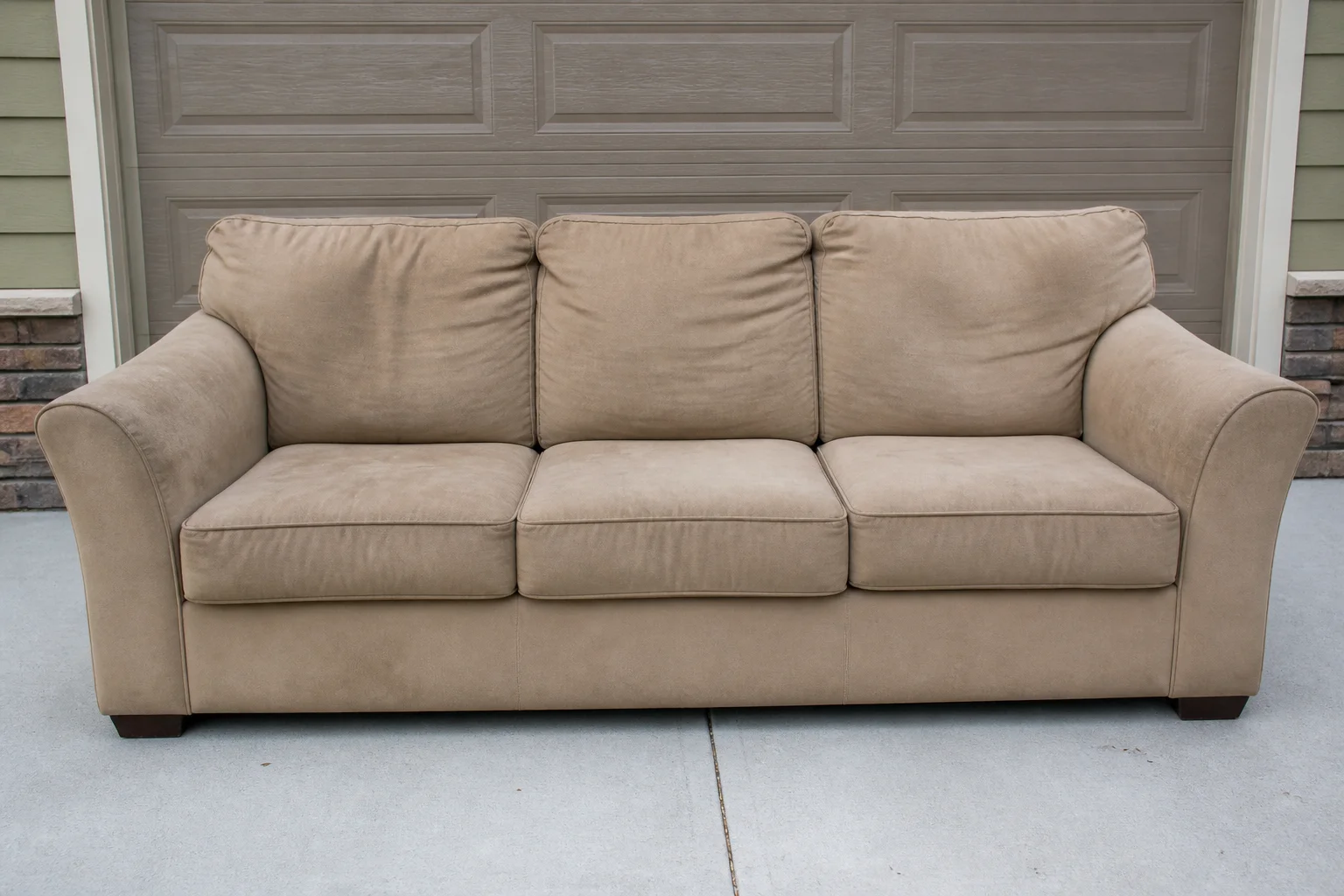
Condition, material and the receiving location determine the next step for an unwanted item. Use this decision guide while planning a cleanout. It helps you communicate preferences, but it does not guarantee donation, recycling or acceptance by a particular facility.
Is it something another person can use?
Start with condition. A clean, functional item may be a reuse candidate, especially if you already have a recipient. A hopeful donation plan should not be the only plan when you have a fixed move-out date.
- Check whether the item is complete, functional and in usable condition.
- Gather ordinary loose hardware or accessories that belong with it.
- Send the recipient photos, dimensions and any condition issues before arranging transport.
- Confirm who collects or delivers, the date and any access requirements before counting it as gone.
If reuse is unlikely, is the material identifiable?
Clean metal, cardboard and some appliances may have recycling options. Mixed-material furniture and contaminated renovation debris can be harder to process. An item being made partly from recyclable material does not establish that the whole item is accepted.
- Identify what the item is made from, as far as you can tell safely.
- Confirm that the receiving location accepts this item, in this condition, from the person or business delivering it.
- Ask about preparation requirements before taking ordinary items apart.
- Keep the recycling plan separate from any unconfirmed removal request.
If neither path is confirmed, plan for removal
Describe the item, condition and access when requesting a quote. Tell the team which items you hope can be reused or recycled, and ask what can be confirmed for this job. There is no promise that every usable-looking piece will find a donation destination.
- List items still needing a destination after your donation attempts.
- Flag heavy or unusual material for separate review.
- Agree on the scope and total, then pay through Square before pickup.
- Leave suspected hazardous or unidentified material untouched and seek appropriate specialist advice.
Keep the options clear during your cleanout
For ordinary items, a simple list with three headings—recipient confirmed, facility check needed, removal quote needed—avoids treating a possibility as a completed plan. Update it when someone accepts an item or when the scope changes. Tell the operator about any changes before the job begins.